


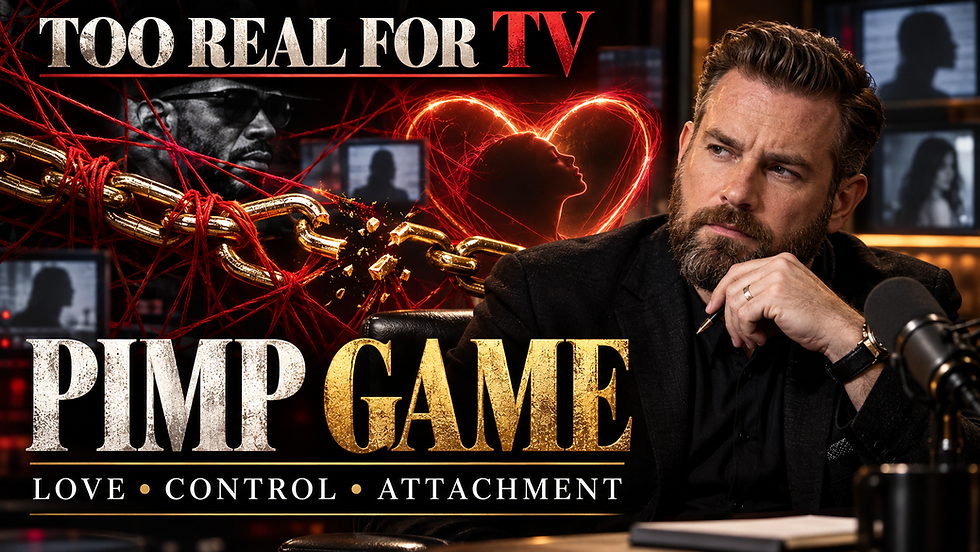
Pimpin’ Ken and “Pimpology”: Where Psychology, Manipulation and Survival Meet
Pimpin’ Ken’s public identity has always been built around language. He does not present “the game” as random street chaos. He frames it as a system with rules, psychology, strategy, hierarchy and consequences. That framing is exactly why his interview demands both attention and caution.
The conversation traces his life from a difficult Chicago upbringing and incarceration at 14 through bank robbery, entry into pimp culture, national visibility and eventually life beyond active pimping. The chapter titles alone reveal the arc: relationships and control, early crime, learning from legendary figures, fame, manipulation, trafficking laws, business and lessons learned.
Ken’s central idea is that influence begins with understanding motivation. “Pimpology,” in his telling, is less about clothes and spectacle than about reading insecurity, desire, ambition and fear. He talks about psychology, money and manipulation as connected forces. The person who understands what another person wants can create leverage over that person.
That observation is real in business, politics, sales, entertainment and relationships. But the ethical line matters. Understanding someone can help you communicate with them—or help you exploit them. Emotional intelligence becomes dangerous when it is used to reduce another person’s freedom.
The interview also shows how criminal subcultures create their own standards of legitimacy. Ken discusses learning from established pimps and gaining recognition inside a hierarchy that the outside world views as exploitative. Within the culture, status may be measured by discipline, earning power, presentation, loyalty and the ability to command attention. Outside that culture, the primary questions are consent, coercion, violence and who benefits from the labor.
Those two frames cannot simply be blended together. A code of conduct inside an exploitative system does not automatically make the system ethical.
Ken’s story becomes especially relevant when he discusses fame and walking away. Visibility through documentaries, television and books turned street knowledge into media and intellectual property. The man who once profited inside the game could now profit by explaining it. That transformation raises a larger cultural question: when does documentation become glamorization?
Audiences are drawn to figures like Pimpin’ Ken because they are charismatic storytellers who speak in memorable rules. The danger is that the sharpest quote can travel farther than the consequence attached to it. A young viewer may hear confidence, control and money before hearing incarceration, manipulation, broken trust and legal risk.
The interview’s later focus on trafficking laws and the changing game is therefore essential. Modern law does not treat force only as physical violence. Fraud, coercion, threats, psychological pressure and control can also be central to trafficking. Age changes everything: a minor cannot legally consent to commercial sex. Nostalgia about an “old code” should never blur those realities.
Ken’s life after pimping offers the more useful lesson. His intelligence, communication skills and ability to read people could operate in legitimate business, speaking and media. That suggests the traits celebrated in the game—discipline, presentation, negotiation and strategic thinking—do not belong to pimping. They can be redirected without exploiting anyone.
The Too Real Takeaway
Pimpin’ Ken’s story is not valuable because it provides a blueprint for controlling people. It is valuable because it exposes how control is built: through attention, language, unmet needs, status and leverage. The mature viewer should study those mechanisms to recognize manipulation—not imitate it.
The cleanest lesson is simple: game without ethics becomes exploitation. Strategy becomes leadership only when the people affected retain dignity, information, choice and a real share of the benefit.


Comments